Thursday, May 11, 2017

"Murderers Always Come Back, Mr. Harter, and There Was Murder in That Old House on Lonesome Hill"

"Ghost on Lonesome Hill."
By Theodore Roscoe (1906-92).
First appearance: Argosy, December 27, 1941.
Short story (9 pages, 3 illos).
Online at The Luminist Archives (HERE).
"Every town has its haunted house; but naturally the one in Four Corners was something super, infested as it was by a spectre who roved its fearsome interior in search of bottled ships and a flying fortune. It also had something new in the way of a ghost-breaker: a newspaper johnny who fished for peril at the bottom of a hidden well . . ."
For Johnny Harter a summer vacation fishing trip is just the thing to unwind after months of high-pressure big city life. Even the local legend of a house haunted by the spirit of an old miser hoarding a fortune murdered by his vicious brother fails to arouse much interest ("as an ace police-reporter, hardened to streamlined metropolitan homicides, he had little faith in spooks")—until, almost unconsciously, he notices some slightly odd behavior on the part of a fellow guest. Curiosity is supposed to be fatal to cats, but at least they have nine lives to play with; Johnny Harter, unfortunately, has only one, and before the night is over it'll be all he can do to hang on to it . . .

Typo: "Blackerry Ridge"

Resources:
- A concise article about Theodore Roscoe focusing on his association with Weird Tales is (HERE).
- Our latest encounter with Roscoe wasn't so long ago (HERE).

Monday, May 8, 2017

Miscellaneous Monday—Number Ten

"Forensic Chemistry in Golden-Age Detective Fiction: Dorothy L. Sayers and the CSI Effect."
By Lee Sullivan Berry.
First appearance: Distillations, Summer 2014.
Article (18 pages as a PDF).
Online at Distillations Magazine (HERE).
"The ancestors of today’s CSI shows can be found between the cheap covers of early-20th-century detective stories. One woman, faithful to the science of her day, helped shape the rules of crime fiction and public understanding of forensic science."
When it comes down to whether, in detective fiction, art imitates life or vice versa, it's probably best to say there's a synergistic relationship between the two, each one influencing and building on the other—which, perhaps inevitably, brings us to Dot Sayers and the Detection Club:

  "[Agatha] Christie may be the best-known member of the Detection Club, but readers will not find the forensic descendants of Sherlock Holmes in her work. To find the crime-scene investigators of the golden age, we must turn to the novels and short stories of Sayers."

Lee Sullivan Berry discusses some of Sayers's works which show how much of a "forensic descendant" of the Sage of Baker Street she was:

  ~ Whose Body? (1923): "This short novel features careful observation of the Holmesian variety and little in the way of forensic science. We catch a glimpse, though, of the author’s abiding interest in modern scientific subjects . . ."
  ~ Clouds of Witness (1926): ". . . [a story that] gives him [Lord Peter Wimsey] the
opportunity to collect and compare soil samples and track footprints and tire prints 
in a lovely example of a classic golden-age subgenre: the English country-house 
mystery. We get a peek at life below-stairs when Bunter collects a sample of blood-
stained clothing . . ."
  ~ The Unpleasantness at the Bellona Club (1928): "A search of the rooms of one of the prime suspects reveals that she has developed recent interests in chemistry and crime fiction—the works of R. Austin Freeman are well represented in her library. Freeman’s detective, Dr. John Thorndyke, was arguably the first fictional forensic medical practitioner, and as Wimsey’s friend Chief Inspector Parker of Scotland Yard points out, Freeman’s stories were 'full of plots about poisonings and wills and survivorship.' In fact, Parker is inclined to see the suspect’s recent interest in the literature of crime as incriminating in itself."
  ~ Strong Poison (1930): "When the judge points out that the arsenic Vane purchased was commercial arsenic, meaning it was colored with charcoal or indigo to prevent its being mistaken (or substituted) for sugar, a reporter covering the trial murmurs, 'How long, O lord, how long shall we have to listen to all this tripe about commercial arsenic? Murderers learn it now at their mother’s knee.'"
  ~ The Documents in the Case (1930): "After The Documents in the Case was published, a chemist wrote to Sayers to inform her that while the plot was fine in theory, in reality natural muscarine—the poison in the toadstool in question—is a rare exception to the rule that natural substances are optically active. Thus, natural muscarine is indistinguishable by polariscope from its synthetic counterpart. The chemist was correct according to what was known of muscarine’s structure in 1930, and Sayers issued a mea culpa." (Subsequently, there was to be a vindicative development which, unfortunately, Sayers didn't live to see.)
  ~ The infamous "CSI effect": "Since 2009 more than 500 scholarly articles have been published investigating the CSI effect from seemingly every angle. Researchers may still argue the case, but undoubtedly few fans of detective fiction attempt to use their favorite books or television shows as a template for what to expect when serving on a jury or as primer on getting away with murder."
(Click on image to enlarge.)
As you can see from this article's discussion of Sayers's works, it's to her great credit that she strove to keep the forensics in her stories as accurate as she could for the time—art imitating life; but also, as an incidental sidelight on her era, we can see how public percep-tions derived from crime fiction shaped expectations—life imitating art—a confirmation that the "CSI effect" is nothing new.

Resources:
- For a thoroughgoing article about the redoubtable Dorothy Sayers, see the GAD Wiki (HERE).
- If you're hungry for more about the "CSI effect," there's gracious plenty, pro and con, 
on the Interweb:
  ~ Wikipedia (HERE). ~ The New Yorker (HERE). ~ The Crime Museum (HERE).
  ~ CBS News (HERE). ~ The Economist (HERE). ~ NPR (HERE).
  ~ The Balance (HERE). ~ THEMIS (HERE, PDF, 15 pages). ~ TV Tropes (HERE).
  ~ A more cautious view from The National Institute of Justice (HERE).
    "Although CSI viewers had higher expectations for scientific evidence than non-CSI viewers, these expectations had little, if any, bearing on the respondents' propensity to convict. This, we believe, is an important finding and seemingly very good news for our Nation's criminal justice system: that is, differences in expectations about evidence did not translate into important differences in the willingness to convict."

The bottom line: "Most of us have such dozens of motives for murderin’ all sorts of inoffensive people. There’s lots of people I’d like to murder, wouldn’t you?”
   — Whose Body?

Saturday, May 6, 2017

"A Moment Later a Cry Rang Out into the Night, and the Great Train Came to An Unwilling Halt in Obedience to the Imperative Jerking of the Communication-Cord"

"The Plymouth Express Affair."
By Agatha Christie (1890-1976).
First appearance: The Sketch, April 4, 1923 (as "The 
Mystery of the Plymouth Express").
Reprinted in The Blue Book Magazine, January 1924 
and October 1941.
Collected in The Under Dog and Other Stories (1951) 
and Poirot's Early Cases (1974).
Filmed for TV in 1991 (HERE and HERE—for now).
Short story (7 pages, 1 illo).
Online at The Pulp Magazine Project (Flip Book HERE
or (PDF, slow load, HERE; scroll down to PDF page 142, 
text page 136).
"'The little grey cells,' so often referred to by the great detective Hercule Poirot, certainly get in their fine-work in this intriguing mystery story by an exceptionally talented writer."
For Alec Simpson, Royal Navy, it should have been just another ordinary train trip to Plymouth, but that body—chloroformed, stabbed, and then stuffed under the carriage 
seat—makes it anything but ordinary. When the victim's father, a wealthy magnate ("the 
steel king of America"), summons Hercule Poirot to investigate, the diminutive Belgian 
soon perceives larger dimensions to the situation, including a missing case holding a hundred thousand dollars' worth of jewelry; "an unprincipled scoundrel" who stands to inherit the victim's fortune; an amorous French nobleman ("an adventurer of the worst 
type"); and an altogether too obvious fashion statement ("a coat and skirt of bright blue frieze, and a small toque of white fox fur"). By story's end, however, the fastidious sleuth 
will be able to declare: "It was of the most simple."
The Challenge to the Reader:
    ("It is suggested that the reader pause in his perusal of the story at this point, make his own solution of the mystery—and then see how close he comes to that of the author. — The Editors.")
Poirotisms:
   ". . . to track footmarks, and recognize cigarette-ash is not sufficient for a detective. He must also be a good psychologist!"
   "Japp is the 'younger generation knocking on the door.' And ma foi! They are so busy knocking that they do not notice that the door is open!"
Comment: Unlike the filmed version, in the story neither Poirot nor the narrator Hastings ever gets near a train station.
Typo: "wont" [for won't a couple of times]
Resource:
- Our last railway-related crime story is (HERE).

The bottom line: “I should fancy, however, that murder is always a mistake. One should never do anything that one cannot talk about after dinner.”
   ― Wilde

Thursday, May 4, 2017

OLD-TIME DETECTION, Spring 2017

(GIVE ME THAT) OLD-TIME DETECTION.
Spring 2017. Issue #44.
Editor: Arthur Vidro.
Old-Time Detection Special Interest Group of American Mensa, Ltd.
34 pages (including covers).
Cover image: Ross Macdonald (and fedora).
No matter what your favorite types of mysteries might be, Arthur Vidro has undoubtedly included something to interest you in this latest edition of Old-Time Detection, a high-
quality publication by anyone's standards, one that is not to be missed.

Featured in the issue: a hard-boiled pioneer . . . the apotheosis of the hard-boiled confessional . . . the epitome of the puzzle plot, the locked room mystery . . . Poirot 
redux . . . the BBC mangling Christie—again . . . a reclusive noir writer lighting up 
the silver screen . . . an impossible crime fiction story . . . and perceptive reviews throughout.

(Note: We've also added a few off-site links—indicated by "Related: (HERE)"—to 
jog your memory.)

==================================================================

(1) "Carroll John Daly and The Snarl of the Beast" by Charles Shibuk (1981; 3 pages).
      Related: (HERE).
". . . a milestone in the early history of the hard-boiled genre . . ."
(2) "Mega-Review": It's All One Case: The Illustrated Ross Macdonald Archives (2016) by Paul Nelson & Kevin Avery with Jeff Wong — A review by Michael Dirda (2016).
      Related: (HERE).
". . . tragedy, or at least aim at it."
(3) "Locked Rooms and Puzzles: A Critical Memoir" by Donald A. Yates (1976; 7 pages).
      Related: (HERE).
". . . life was pleasant and uneventful until my thirteenth year, when I read Ellery Queen's The Chinese Orange Mystery . . ."
(4) "Mega-Review": Closed Casket (2016) by Sophie Hannah — A review by Brigitte Weeks (2016).
     Related: (HERE).
"There isn't enough quirky interplay . . ."
(5) "Christie Corner" by Dr. John Curran (2017).
      Related: (HERE).
". . . the enormity of the liberties taken with her masterpiece."
(6) "The Woolrich Films: Part One in a Series" by Francis M. Nevins (1988; 2 pages).
      Related: (HERE).
". . . haunted by a sense of doom that never left him . . ."
(7) "Thirty-Plus Years Ago: Murder in Print" by Jon L. Breen (1983).
      Related: (HERE).
". . . stronger on anecdote than literary criticism . . ."
(8) "The Paperback Revolution" by Charles Shibuk (1969).
      Related: (HERE).
". . . probably the best novel Macdonald ever wrote."
(9) Haycraft-Queen Cornerstones: "File #21: Anthony Berkeley's Trial and Error (1937)" — A review by Arthur Vidro (2017).
     Related: (HERE).
". . . a giant in the Golden Age of detective fiction."
(10) Fiction: "The Hunt for Fred October: A Jacob Black 'Impossible Crime' Mystery" by Michael E. Grost (8 pages).
     Related: All eighteen of Michael Grost's Jacob Black mysteries can be accessed from (HERE).
". . . Jake's instincts, which had rarely lied to him, told him something was up."
(11) "Mini-Reviews":
       The Plague Court Murders (1934), reviewed by Douglas Greene (1995); The Secret of High Eldersham (1931), reviewed by Amnon Kabatchnik (1973); The Black Camel (1929), reviewed by Trudi Harrov (2017); and A Life for Sale (1927), reviewed by Charles Shibuk (2017).
      Related: (HERE), (HERE), and (HERE).
". . . a historical romance within the larger framework of a detective story."
". . . not only a novel of detection, but also a novel of folklore."
". . . engaging, accessible writing style . . ."
". . . a fast, easy read . . ."
(12) "The Readers Write":
       "I sympathize with Jon Breen's intention to just 'glance' at OTD when it comes 

in, though that is also in part to make it last. Because once I have it in hand and 
start reading, I have trouble stopping, so I'm through it too fast, instead of savoring 
it, a bit at a time."

(13) "Last Issue's Puzzle":
       Eleven readers got it right!

(14) "This Issue's Puzzle":
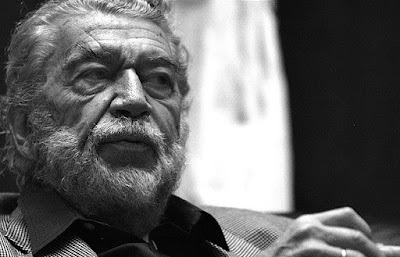
       "Below is a photograph of an old-time mystery writer. Who is he?"

Subscription information:
- Published three times a year: spring, summer, and autumn.
- Sample copy: $6.00 in U.S.; $10.00 anywhere else.
- One-year U.S.: $18.00 ($15.00 for Mensans).
- One-year overseas: $40.00 (or 20 pounds sterling or 25 euros).
- Payment: Checks payable to Arthur Vidro, or cash from any nation, or U.S. postage stamps.
Mailing address:
   Arthur Vidro, editor
   Old-Time Detection
   2 Ellery Street
   Claremont, New Hampshire 03743
Web address:
   oldtimedetection@netzero.net

==============================================
Resource:
- Our review of the Autumn 2016 issue of OTD is (HERE).

Monday, May 1, 2017

Miscellaneous Monday—Number Nine

ANOTHER TWO-FER today, the first an entertaining and thoughtful, if admittedly subjective, article specifying what the author would regard as "the perfect detective novel," the second a more scholarly and therefore deeper critique of how academics subject a major component of popular culture—crime fiction—to searching analysis . . .

"The Perfect Detective Novel."
By Suzanne S. Barnhill.
Text of a speech (10 pages, 1991).
Online (HERE) (PDF).
(Note: No discernible spoilers.)
"I decided that they [what factors contribute to a successful detective novel] can be broken down into characteristics of the novel itself, the detective, and the author, and I will treat them in that order."
Suzanne Barnhill wants us to know at the outset:

   "If you’re already a mystery reader, I probably can’t tell you anything you don’t already know, and if you’re not already a mystery fan, there’s probably not much I can say that will interest you or get you interested in reading detective novels.  . . . if you’ll bear with me and promise not to expect any startling new revelations or profound insights, I’ll share with you my own entirely personal opinion, based on years of voracious and relatively uncritical reading, of what factors contribute to a successful detective novel."

The reader should remember that Barnhill is dealing only with the detective novel:

   "Although it may seem unnecessary to say this, I want to emphasize that my subject today is full-length novels only, not short stories or nonfiction accounts of true crimes. There are many excellent detective short stories, and some of the best-known authors have written almost exclusively in this form, but they are outside my scope."

Random excerpts:

   ". . .  every novel with any sort of plot is a kind of mystery, as the reader must wonder what is going to happen next or stop reading. But mystery novels and detective stories, in addition to suspense, also make a mystery of what has already happened."

   ". . . the act of murder inherently eliminates one of the most important witnesses to the crime, making it more difficult to solve."

   "The current TV generation of readers are much more apt to be content to be spectators, just reading along without much involvement."

   "I sometimes enjoy reading mysteries written in the past, but when present-day writers try to write in fancy dress they become name droppers, and the effect is spoiled."

   "The erudite detective is now almost a thing of the past; the public-school-educated Scotland Yard man who capped quotes with the scholars he interviewed was impressive but perhaps a little intimidating. But now even college professor detectives who are the creation of college professor authors are guilty of some shocking solecisms, and publisher’s editors seem to turn a blind eye."


   "Many early writers felt a wife would be a distraction to a detective; one gets the impression, reading their comments, that they felt their detectives were modern 
Sampsons whose strength would be sapped by the love of a woman."

   ". . . even able-bodied detectives should not be superhuman; they should suffer realistically, not bounce back like cartoon characters."

   "Finally, the perfect detective, like his author, should have a sense of humor. There is 
more scope for humor in the novel when the detective is the narrator, and most of the 
lighter detective novels are written in the first person, but even third-person narrative can 
show humor in the detective. Wit and wordplay are especially enjoyable, but I’ll settle for 
at least the realization that life is sometimes less than earnest."
~ ~ ~ ~ ~
Reviews of Stephen Knight's Form and Ideology in Crime Fiction (1980) (online HERE) and Dennis Porter's The Pursuit of Crime: Art and Ideology in Detective Fiction (1981).
By Robert Zaslavsky.
First appearance: College Literature, Spring 1983.
Book review article (4 pages).
Online (HERE) (PDF).
(Note: No spoilers.)
"Both Knight and Porter, then, have gone a long way toward providing a basis for studying the ideology of the mystery genre."
Unlike another recent post (last week's Miscellaneous Monday), thanks to Merriam-Webster we can at least define terms at the outset:

   a: a systematic body of concepts especially about human life or culture
   b: a manner or the content of thinking characteristic of an individual, group, or culture
   c: the integrated assertions, theories and aims that constitute a sociopolitical program.

As you can see, the term "ideology" is broad enough (and sufficiently vague) to qualify for any research program grant money that might be in the offing. Furthermore, we've noticed that academic types seem to place a premium on the ideological content of a literary work, often to the exclusion of all other aspects of that work. Based on what you'll be reading in Prof. Zaslavsky's book review, feel free to decide which one(s) of the above definitions best fit(s) what the two authors are examining.

Some random excerpts (and be sure to have a college-level dictionary handy):

   "Both Knight and Porter are committed to the ideologically oriented task of redeeming popular literature through the most popular of popular genres, the mystery-suspense-crime genre, and of seeing that genre as paradigmatic for all literature of whatever stripe. And both their studies are rewarding, although in slightly different ways . . ."

   "According to Knight, criticism should not allow the commercial success of a text to act as a deterrent or to be a ground for its dismissal, but rather criticism should reflect upon the societal interests and needs which the text encapsulates. Indeed, 'a good literary critic should be able to say why a mass-seller works, and how it works.' And Knight selects as his focus crime fiction, the 'major examples of [which] validate a whole view of the world, one shared by' its audience."

   "Of course, Sherlock Holmes is the detective, through whom Conan Doyle 'domesticates' the twin notions of positive scientific necessary causality and the individual’s power to discern that causality: 'Doyle’s ability to popularize and naturalize rational individualism runs through the stories and is central to their success.' Holmes is the heroic apotheosis of bourgeois professionalism, fusing a materialistic view of the world, a pervasive egalitarian-ism (with its corresponding disdain for aristocracy), and a view of crime—at least in the 
most popular short stories—as petty and unthreatening."
(Click on image to enlarge.)
   "In the discussion of [Raymond] Chandler, Knight tellingly shows how the ostensible objectivity and naturalism of the style are in reality a black mask for a subjective romanti-cism.  . . . Knight sees Chandler’s idealist form and his presentation of the informed and 
self-defending alienated individual as a real advance over his predecessors. It is the 
elevation of the moral value of the individual and the denigration of the external collective and mechanistic world. Its only defect is that it deliberately evades 'the realities of urban crime.' The police procedural story, a post-WW II sub-genre, is meant to remedy this defect and was formulated in response to the media-sophisticated and hence better informed audience which demanded greater verisimilitude in its crime fiction."


  "Porter introduces his survey by sketching the distinction between the ancient primacy of the mythic-sacred crime and the primacy of profane crime in the desacralized modern world, although both types have been co-present through all human history."

   ". . . the discussion of Poe as a historical culmination transforms itself into a structural analysis of the genre as a whole, in particular the principle of backward construction, in which the denouement is legislative for all the narrative units which precede it. With Dupin—the artist-detective amateur of genius, the fusion of gothicism and ratiocination—Poe demonstrated his mastery of the narrative technique of suspense which operates more or less in all narratives, a displacement of chronological time which must be logico-temporally restored and retarded simultaneously . . ."


   "Of course, the detective novel possesses readability par excellence, combining as no other form does both pleasure and intelligibility."

   "The most perfect language of detection, it seems, is the language of Chandler, a mythic stylization of quintessential American values which is a reaction to the tawdriness of American life."

   "Porter concludes his argument with the assertion that 'detective novels provide reassurance, not only because they deal in identifiable good and evil and end up 
punishing the latter but also because they propose a world of fixed cultural quantities.'"

   ". . . [Porter] examines works which he calls anti-detective, works which deliberately thwart the rhythm of desire that is satisfied so well in detective fiction, works by Henry James, Kafka, Robbe-Grillet, and Borges."

James: "anti-detective"
Robbe-Grillet: Likewise
Borges: Ditto
   "Both Knight and Porter, then, have gone a long way toward providing a basis for studying the ideology of the mystery genre. Despite the fact that they both commit what used to be regarded as the cardinal mystery fiction critic crime, namely revealing the endings of the books that they discuss, Knight’s and Porter’s two studies are worthwhile, informative, thoughtful."

Resource:
- There's more about Dr. Zaslavsky (HERE).

Thursday, April 27, 2017

"If You Wasn't a Policeman I'd Arf Murder You"

"The Constable's Move."
By W. W. Jacobs (1863-1943).
First appearance: The Strand Magazine, October 1905.
Reprinted in Cosmopolitan, November 1905.
Collected in Captains All (1909).
Short short story (7 pages, with 5 illos).
Online at Archive.org (HERE), Project Gutenberg (HERE3 illos), and American Literature (HERE; no illos).
"It's a disgrace to Mulberry Gardens to 'ave a copper come and live in it," said the indignant Grummit; "and to come and live next to me!—that's what I can't get over."
They say you can choose your friends but you can't pick your relatives. For Mr. Bob Grummit, something even worse than that has happened: P. C. Evans, a police constable, has moved in next door—a disaster of the first magnitude. Not that Bob Grummit is a criminal—he isn't (although he has had run-ins with the law in the past); he just doesn't like policemen, that's all. Hostilities escalate as Grummit schemes against his neighbor, but being provocative by vandalizing Evans's yard and turning to wife-beating proves to be of no avail; the final straw, when it snaps, will involve flowers—and an ironic outcome for both of them . . .
Resources:
- Our author's lasting fame is secure thanks to what is probably the most anthologized 
short story ever written, "The Monkey's Paw" (1902); information about W. W. Jacobs 
is at Wikipedia (HERE), E-notes (HERE), and the ISFDb (HERE).
- "The Constable's Move" was filmed in 1923 (HERE), with obvious major plot alterations; quite a few of Jacobs's stories have been filmed for movies and TV (HERE).

The bottom line: "The Bible tells us to love our neighbors, and also to love our enemies; probably because generally they are the same people."
Chesterton

Wednesday, April 26, 2017

"I'd Rather Be Dead Than Insane"

"The Secret."
(a.k.a. "Unfinished Business").
By Steve Allen (1921-2000).
First appearance: Collier's, September 28, 1956.
Reprinted in Ellery Queen's Mystery Magazine (EQMM), May 1964.
Short short short story (1 page).
Online at UNZ (HERE).
"He couldn't tell anyone what had happened: they wouldn't believe it."
When you're dead, you're dead . . . right?

Resources:
- For those of you of a certain age, our author is THE Steve Allen, the entertainer (HERE) whose multifarious career encompassed radio, movies, TV, songwriting, books (including 
a ghost-written mystery series), and magazine articles (HERE).

The bottom line: "Nothing is better than the unintended humor of reality."
— Steve Allen