Thursday, December 19, 2013

"Nearly All the Literature of the World Is About Its Wicked People"

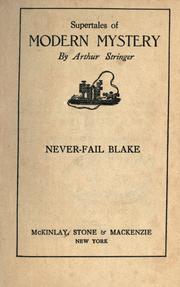
Fictioneer Arthur Stringer held Chandleresque beliefs about just how "realistic" crime stories should be. A few excerpts:
WE ARE FILLING our heads with a lot of sentimental nonsense when we take it without question that the criminal of stage and fiction and the criminal of real life are one and the same.
Mr. Arthur Stringer, who knows something about both types, having dealt with them in real life for the sake of his fiction, declares they are about as wide apart as the poles. He finds it high time for some one to point out this fact and to stop the stultification of one's intelligence with such beliefs.
The ''crime writers,'' he reminds us, have been "solemnly announcing themselves as realists." Even editors are beginning to affix foot-notes to say that their crime stories are transcripts of real life.
A crime novel asserts that it is an actual portrayal of police conditions. A playwright gets an ex-convict to form a member of the cast. Some of the ways in which these so-called realists fool the gullible among us are set forth by Mr. Stringer . . . — Unsigned, "The Lure of the Criminal," THE LITERARY DIGEST (April 26, 1913)
Stringer presents a veritable catalogue of avoidable errors that crime fiction authors can stray into:
"I know of one novelist who describes a safe-breaking scene wherein the master-crook attaches a wire to a chandelier and an electrode to the end of this wire, and by the deliciously naive means of a mere lighting circuit burns his way through a ponderous steel door. It would be no more ridiculous to say that he pried that door off with his fountain pen.
"Another novelist with an international reputation has his villain sit on a steamer's deck and quietly read at the mast-head an incoming wireless message. It is of little consequence, of course, that the professional operator in the wireless room is compelled to have a microphone of the most delicate nature held close to his ear before he can even pick up that same incoming message. This same villain, I take it, could stand on the Singer Tower and hear a hairpin fall off a bureau up in Albany.
"An important feature in a reigning 'realistic' crook play is a Maxim silencer, which is used on a revolver, despite the fact that a silencer can not be and never has been attached to a revolver.
"In still another Broadway sleuth-play a woman under suspicion casually takes up a sheet of writing-paper from the desk of a man mysteriously murdered. The detective on the trail of the offender holds up this sheet to the audience, showing the finger-prints thereon imprest as plainly marked as ink spots. Now, the murdered gentleman may or may not have had the hobby of inditing his correspondence on chemically sensitized note-paper. Or, on the other hand, the lady under suspicion may have been opening a tin of printer's ink in one of the rooms off-stage. But without one of these two extremely remote contingencies the overconvenient appearance of those nice black blots must be accepted as either absurd or miraculous." — "The Lure of the Criminal," op. cit.
As for how writers present their criminal characters:
"There is no such thing as a romantic criminal. By this I mean that there is no romance about professional crime. There is no Raffles in real life . . .
"The playwright who exploits crime loves to have his hero bad only nor'-nor'-east. When the wind is in the other quarter he is the gentlest of lovers and the most impeccable of characters.
"It is the same with the book criminal. Even his felonies areprompted by a supposedly ameliorating love of adventure. He follows the gentle art of burglary for the thrill that's in it. He likes the game for the game's sake. He makes house-breaking and highway robbery lose half their evil by losing all their grossness. He seduces you into the belief that it's quite fit and proper for him to take toll of the overjeweled ladies who are enjoying the same week-end with him in the same country house, or to exact midnight largesse from the altogether unsympathetic jeweler who has not appreciated his devil-may-care audacities, his good breeding, and his languidly enunciated epigrams.
"We remember that it's only human to sympathize with the bad and tolerate the good. We follow our fiction-made villain through his round of denatured adventures; we feel that he is being true to some wider scheme of things than the trivial laws that he is breaking; we like to witness his leap through the paper hoops of the temporal while swayed by those emotions which we regard as eternal." — "The Lure of the Criminal," op. cit.
Resources:
- Wikipedia ("Arthur Stringer [writer]").
- Previous ONTOS article.

Category: Detective fiction

"She Left Her Sense of Humor Behind Her"

THE MAXWELL MYSTERY.
By Carolyn Wells.
J. B. Lippincott.
1913. 302 pages. $1.25
Two contemporary reviews:
This is a pleasant, but rather conventional, detective story involving the usual murder mysteries, love stories, and amateurs with "detective instincts."
Finally, we have a solution by Fleming Stone, the greatest of American detectives, whose "eagle eye and massive brain" always surmount difficulties.
Philip Maxwell has a house party at the home of his wealthy uncle with whom he lives, and whose heir he is, a party made up of fascinating young people and including even a "belted Earl."
On the night of the big dance, Philip is found murdered and in such circumstances that almost every one in the house comes under more or less suspicion. The tracing of clues gives opportunity for the development of detective and erotic elements. The reader has a chance to make brilliant deductions for himself before the perpetrator of the crime is tracked and punished.
Exciting combinations of the expected and the unexpected attend the development of the search for the criminal. The suspense keeps the interest always at fever heat. — Unsigned, "Novels of the Season," THE LITERARY DIGEST (April 19, 1913; scroll to page 900)
Miss Carolyn Wells as humorist and writer of vers de societe and as author of a detective story are two quite different people. It is unfortunate that in going from one field to the other she left her sense of humor behind her. —  Unsigned, "The New Books," THE OUTLOOK (May 3, 1913)
Resources:
- John at PRETTY SINISTER BOOKS (December 10, 2011): "The Carolyn Wells Technique, or: How I Learned to Stop Thinking and Love the Mess."
- The GAD Wiki ("Carolyn Wells").
- A previous ONTOS article.
- Wikipedia ("Carolyn Wells").
- Online text.


Category: Detective fiction

Wednesday, December 18, 2013

The Missing Fair Play

Mike Grost has shown that H. C. Bailey's detective fiction exerted a decided influence over other, more well-known writers of his period and after, among them Margery Allingham, Anthony Wynne, Philip MacDonald, Elizabeth Ferrars, J. J. Connington, Gladys Mitchell, and Ruth Rendell.

From the '20s through the '40s, Bailey enjoyed remarkably high critical esteem:
Unanimous critical acclaim at one time greeted Bailey's work. He was both praised and anthologized by S. S. Van Dine, Dorothy Sayers, Ellery Queen, and Howard Haycraft, a clean sweep of the great critics of the Golden Age. 'The Encyclopedia of Mystery and Detection' says that he was the most popular mystery writer in Great Britain between the wars. This means that his works were more popular than Chesterton, Christie, Dorothy L. Sayers or Carr, something that seems incomprehensible today. — Mike Grost, "H. C. Bailey", A GUIDE TO CLASSIC MYSTERY AND DETECTION
Grost thinks Bailey's place in detective fiction annals is assured, but with an exception:
Where does Bailey's work fit in detective fiction history? Certainly, Bailey and company considered themselves aligned with the fair play, puzzle plot detective stories of the Golden Age. I would agree, with the caveat that the Bailey school's work often fails badly in the "fair play" department. — Mike Grost, op. cit.
Bailey and his school also tended to overplay the drama a little too much:
The most typical 1930's story of Bailey, or one of his followers, has the following paradigm. The detective is usually a medical expert, a doctor or scientist who is also a member of Britain's upper classes, who works closely with Scotland Yard, and who is highly respected by them as a genius. He is assigned a case, one that often looks superficial or simple. The detective is disturbed by some simple looking clue, and suspects that some evil conspiracy is lurking in the background. He follows up on this, often over the protests of the police that he is making things too complicated, and discovers an incredibly evil conspiracy behind the wings. The goal of this conspiracy is to injure or kill some innocent helpless person, usually either a small child, or a defenseless young woman. The motive is usually greed, such as obtaining an inheritance, combined with a very sick mentality that sees nothing wrong in the torture of the innocent.
Oftentimes the mechanism of this diabolical conspiracy is scientifically based, and the villain has a scientific or medical background, too. Detective work uncovers a hidden background to the current crime, often another crime in the past, one that forms a complex piece of mystery plot all on its own.
At the end, there is a melodramatic finale, in which the detective struggles to keep the villain from committing yet further sinister crimes. Throughout the story there is an atmosphere of evil, combined with the action of melodrama.
One can see several problems with this formula from such a description. There is often a concentration on horror elements in such a work . . .
The hidden conspiracies and complex backgrounds of the tales are often "deduced" by the detective from the slenderest and most innocuous looking clues. It often seems to me that their approach violates the convention of "fair play", that there is no way an intelligent reader or other independent observer could actually deduce these complex background plots from such slender threads. — Mike Grost, op. cit.
For more analysis, see Grost's page on "The Bailey School"; follow the links to several reviews.
Resource:
- A Wikipedia article ("H. C. Bailey").

Category: Detective fiction


Tuesday, December 17, 2013

The Dilettante Sleuth Par Excellence

TRENT INTERVENES.
By E. C. Bentley.
Knopf.
1938. $2.00
Collection: 12 stories.
Bentley has been called "the father of the Golden Age of detective fiction." Here are various thoughts from various sources:
Twelve short stories ranging from slick swindling to diabolic murder solved laconically by urbane Philip Trent. - To say that Trent in small pieces is as excellent as Trent entire is recommendation enough. - Verdict: Pastiche de luxe. — THE SATURDAY REVIEW (October 29, 1938)
All lovers of literary crime may be grateful for the fact that when that splendid novel, 'Trent's Last Case', appeared, Mr. Bentley didn't say positively. Here in 'Trent Intervenes', Mr. Bentley has done something valuable for detective fiction. He has been at once episodic and exciting, at once casual and satisfy-ing. Suavity and melodrama, leisureliness and suspense, go hand in hand. The twelve stories are far above the ruck, with never so much as a veiled insult to the reader's intelligence. — S. S. Van Dine, "Books," SCRIBNER'S (January 1939)
. . . several of the stories in 'Trent Intervenes' are pretty good, and quite a number have been anthologised over the years, sometimes a number of times. My favourites include ‘The Genuine Tabard’, ‘The Inoffensive Captain’ and ‘The Clever Cockatoo’. Philip Trent is an amiable character, an artist, journalist and urbane man about town – where are his modern equivalents?! He investigates rather languidly at times, but Bentley was a capable writer, and even the slighter tales are perfectly readable. — Martin Edwards, DO YOU WRITE UNDER YOUR OWN NAME? (22 October 2010)
Trent does most of his sleuthing by engaging in conversation with members of the working class and lower middle class, and painlessly extracting information from them in passing, about the upper class suspects with whom they have been in innocent contact. These working class characters are usually shown to be nice pleasant people, although occasionally they can be crooked.
Trent is suave, smooth and debonair, not to mention exquisitely well mannered and correct, and is intended to be the opposite of the dramatic, eccentric sleuths of other writers. He is a decently behaved upper middle class professional man, who is always polite to the tradesmen with whom he comes into contact.
It is a relation that can have all sorts of political meanings read into it: there is almost an economy of information, which flows from the workers to the upper middle class Trent.
Bentley's stories are short and to the point, with little excess baggage. But they often come in pairs, with each being a variation on a theme.
There are two Agatha Christie style murder mysteries, set in the English countryside; two tales about rogues who wind up battling the police in apartment houses; two tales about people who ingeniously disappear; two tales about scholars assaulted in the countryside; and two tales about English people traveling in the Mediterranean, who suffer from plots trying to convince them that they are going crazy.
This doubling allows Bentley to explore new ideas, but which are related to the plot of a previous tale. It also gives the collection as a whole a sort of artistic unity. There are other parallelisms which run orthogonal to these story pairs: there are two stories with mischievous animals, and two tales with courageous young girls who are down on their luck. — Mike Grost, GAD Wiki ("Trent Intervenes")
Resources:
- A Wikipedia article ("Edmund Clerihew Bentley").
- Martin Edwards: "The Detective in British Crime Fiction."

Category: Detective fiction

Not Quite the Brilliance of Agatha Christie

THE BOLT.
By P. R. Shore.
Dutton.
1929. $2.00
Current price: $822.50
No reprints as of now.
This one might be worth seeking out—if it ever gets reprinted. Excerpts from three reviews:
RINGSHALL, like all old English villages, is full of tradition and superstition. When Mrs. Harrington, wife of the Squire, takes it upon herself to run its affairs, the townsfolk become resentful and even threatening.
Late in the evening of the annual fair, after everyone has had a full day of her personality, the Squiress is found dead on Foakes Green.
Inspector Grier, after delving into the victim's past, brings to light a highly checkered career involving blackmail, a large fortune, and a missing daughter. — THE BOOKMAN (February 1930; Jump To page 698)
Thoroughly intriguing novel by a minor mystery writer who wrote only two books in the genre. This one from 1927 is a classic English village mystery with a haunted green, a resident witch who curses the victim, a spinster narrator, a curate who acts as amateur sleuth with the spinster, and a shrewd policeman.
We have two chapters in which the curate and spinster examine train tables to determine if one of the suspects is lying about his alibi. We have much hanky-panky with servants. We have the surfacing of a sinister blackmailing foreigner who reveals the victim’s deep, dark secret.
All in all, crammed full of Golden Age plot motifs nearly all of which become tired by the 1930s in their overuse. — John, PRETTY SINISTER BOOKS (May 11, 2011)
Although professional detectives pop in and out, most of the work is done by Miss Leslie and her friend the curate. The solution finally comes by means of some hidden papers, but the reader is given a chance to put most of it together herself. The solution is good enough, though it is not cut to a multi-faceted, Christie-like brilliance. — Curt J. Evans, MYSTERY*FILE (16 October 2010)
Resource:
- BEAR ALLEY (October 23, 2010)


Category: Detective fiction

Monday, December 16, 2013

Will the Real Chester K. Steele Please Stand Up?

THE GOLF COURSE MYSTERY.
By Chester K. Steele.
1919. Reprinted 2008.
If Chester K. Steele never really existed then how could he write at least six mystery novels? The Magic Lamp Press website explains:
Chester K. Steele never existed . . . he was merely a figment of the publisher's imagination.
Edward Stratemeyer (1862-1930) was born in Elizabeth, New Jersey. After graduating high school, he began writing juvenile fiction and created the pen name "Chester K. Steele," to use for books written by several authors hired by his publishing company, the popular Stratemeyer Syndicate.
The Chester K. Steele mysteries were intended for an older audience than the children's books like the Rover Boys and the Bobbsey Twins series Stratemeyer normally published.
Edward wrote many books and stories for young readers using numerous pseudonyms. In 1891, he married Magdalene Baker Van Camp. They had two daughters.
In 1905, he founded the Stratemeyer Literary Syndicate, for which he once again hired numerous writers whom he supplied with characters, plot outlines, and pseudonyms.
'The Mansion of Mystery' is the only book he wrote himself. The other books, including the present one ['The Golf Course Mystery'], were written by members of his publishing syndicate.
In 'The Golf Course Mystery', Harry Bartlett and Gerry Poland are friendly rivals for the hand of Viola Harwell. Unfortunately, Harry's family got the best of Viola's father, the Honorable Horace Harwell, in a business deal. Viola shows no favoritism, but her father is rumored to be distinctly cool toward Harry. The Honorable Horace dies in the middle of a golf match. The cause of death is poison. Was it suicide due to financial reverses? Or was it murder, with Harry as a prime suspect? 
The reluctant detective Colonel Ashley, assisted by his servant Shag, must solve the case. The Colonel would rather be fishing, but murder has a way of interrupting his reading of Walton's 'Compleat Angler'.
Resources:
- A Wikipedia article ("Chester K. Steele")
- Online texts available:
  ~ THE GOLF COURSE MYSTERY (1919) - HERE
  ~ THE DIAMOND CROSS MYSTERY (1918) - HERE and HERE
  ~ THE MANSION OF MYSTERY (1911) - HERE and HERE

Category: Detective fiction

AC and the Short Form — Part 4

The final installment highlighting Agatha Christie's short story writing skills:

THE ADVENTURE OF THE CHRISTMAS PUDDING (1960) [REVIEW]
POIROT'S EARLY CASES (1974) [REVIEW]
HERCULE POIROT'S CASEBOOK (2004) [REVIEW]
WHILE THE LIGHT LASTS AND OTHER STORIES (1997) [REVIEW]
THE HARLEQUIN TEA SET AND OTHER STORIES (1997) [REVIEW]
MASTERPIECES IN MINIATURE: THE DETECTIVES (2005) [REVIEW]
Part 1 here - Part 2 here - Part 3 here.

Category: Detective fiction