Sunday, September 22, 2024

"Why Didn’t We See an Attempt at Fight or Flight?"

A GANG WAR is about to erupt on one of Saturn's moons, forcing detectives to search for someone known only as . . .

"The Bloody Dentist."
By Jacob Holo (Homepage HERE; ISFDb HERE).
First appearance: Free Stories (2022) at the Baen Free Library.
Short story (15 pages).
Online at the Baen Free Library (HERE).
(Parental caution: Strong language.)

   "Sometimes I hate being right."

SITTING on a powder keg has never been a recommended posture to take, but that's where Detectives Cho and Raviv of the Consolidated System Police find themselves. In their westside story, Tony and Maria had the Jets and the Sharks to contend with; here it's the Frost Jackals and the Numbers—and love has nothing to do with it . . .

Main characters:
~ Lorenz Napello (deceased), Acting Deputy Detective Isaac Cho ("Isaac had been mentoring under the senior detective for roughly two years now"), Senior Detective Omar Raviv ("nowadays Raviv let—indeed encouraged—Isaac to take the lead, only taking charge when he felt it absolutely necessary"), Cephalie (Encephalon) ("He’s missing five teeth. Or four and three quarters, depending on how picky you want to get about counting the pieces"), Bartholomew Kozlowski ("What is a weapon, but a tool used for destruction rather than creation?"), Pamela Mathey ("managed to contradict herself four times in the span of the first few minutes alone. I don’t know if we can trust a single word out of her mouth"), Lieutenant Alfons Garnier ("my hands are tied"), Deacon Morrisette ("What a pleasure it is to have not one but two members of the illustrious System Police in our presence"), Dario Vogl ("that mouthy punk mocked your good name"), a teenage girl ("The Bloody Dentist claims another one"), and the lit fuse ("It was almost funny when he thought about it, how these stupid degenerates would soon aid him so unwittingly").

Here's "the moment" again:
     The pieces finally came together in Isaac’s mind, and he snapped his fingers.
     Raviv glanced his way. “Found something?”
     “You could say that.” He gave the senior detective a savage grin. “I know who 
     the killer is.”

Typo: "in actually".

References and resources:
- "the gangs have flooded what’s here with viruses":
  "A gang is a group or society of associates, friends, or members of a family with a defined leadership and internal organization that identifies with or claims control over territory in a community and engages, either individually or collectively, in illegal, and possibly violent, behavior, with such behavior often constituting a form of organized crime." (Wikipedia HERE.)
- "Titan, the largest and most populous of Saturn’s moons":
  "Titan is the largest moon of Saturn and the second-largest in the Solar System. It is the only moon known to have an atmosphere denser than the Earth's and is the only known object in space—other than Earth—on which there is clear evidence that stable bodies of liquid exist. . ."
  "the Ice Grotto"; "the ice-sheathed corridors"; "walls a mixture of rock and ice":
  "Titan is primarily composed of ice and rocky material, with a rocky core surrounded by various layers of ice, including a crust of ice and a subsurface layer of ammonia-rich liquid water. Much as with Venus before the Space Age, the dense opaque atmosphere prevented understanding of Titan's surface until the Cassini–Huygens mission in 2004 provided new information, including the discovery of liquid hydrocarbon lakes in Titan's polar regions and the discovery of its atmospheric super-rotation. The geologically young surface is generally smooth, with few impact craters, although mountains and several possible cryovolcanoes have been found."
  "Titan's gravity":
  It's only about 14 percent that of Earth, so that someone weighing 200 pounds on Terra would weigh 28 pounds on Titan. (Wikipedia HERE.)
(Click on image to enlarge.)
Titan compared to the Earth and the Moon.
- "Data passed between the LENS and his wetware":
  "Wetware is a term drawn from the computer-related idea of hardware or software, but applied to biological life forms. The prefix 'wet' is a reference to the water found in living creatures. Wetware is used to describe the elements equivalent to hardware and software found in a person, especially the central nervous system (CNS) and the human mind. The term wetware finds use in works of fiction, in scholarly publications and in popularizations." (Wikipedia HERE.)
  "A wetware computer is an organic computer (which can also be known as an artificial organic brain or a neurocomputer) composed of organic material 'wetware' such as 'living' neurons. Wetware computers composed of neurons are different than conventional computers because they use biological materials, and offer the possibility of substantially more energy-efficient computing. While a wetware computer is still largely conceptual, there has been limited success with construction and prototyping, which has acted as a proof of the concept's realistic application to computing in the future." (Wikipedia HERE.)
- "the size of a vibro-blade":
  "A futuristic bladed weapon that has Absurd Cutting Power because it vibrates. The idea is that high-frequency vibrations in the blade allow the weapon to cut through nearly anything, essentially making it an extreme version of an electric turkey carver." (TV Tropes HERE.)
(Image via Fringes of Space.)
 It seems that Robert Heinlein came up with it first; consult Technovelgy (HERE).
(Artwork by Donato.)
- Real-life dentists, and not just fictional ones, can also be deadly; see John Baer's "Murder in Haste" (HERE). However, an exception should be made for Peter Clancy (HERE).

The bottom line:

Unless otherwise noted, all bibliographical data are derived from The FictionMags Index created by William G. Contento & edited by Phil Stephensen-Payne.
~~~~~~~~~~~~~~~~~~~~~~~~~~~~~~~~~~~~~~~~~~~~~~~~~~~~~~~~~~~~~~~~~~~~~~~~~~~~

Wednesday, September 18, 2024

"There Was Blood in His Black Hair, Between His Ears"

THERE'S SOMETHING ABOUT DOGS that crime fiction writers and their 'tecs find attractive, and the feeling seems to be mutual, a case in point being . . .

"Snoops."
By Arthur J. Burks (1898-1974).
First appearance: Detective Tales, December 1935.
Short short story (7 pages).
Online at The Luminist Archives (HERE; go to text page 120).
(Note: Text very faded but readable.)

   "He was a natural-born comedy actor, without even trying to be."

WHO needs Sam Spade when Snoops is on the case?

Principal characters:
~ Detective Nate Hirl ("I'm no Sherlock"), Snoops ("He wanted to be bought by someone, and he didn't much care whom"), Mike Hargan (deceased), the chief ("'Don't tell me, Nate,' said the chief, 'that after all these years you finally found a clue?'"), and Flit Casso ("That damned dog knew where it was all the time!").

References and resources:
- "a low-comedy Scotty":
  "They are an independent and rugged breed with a wiry outer coat and a soft dense undercoat. The first Earl of Dumbarton nicknamed the breed 'the diehard'. According to legend, the Earl of Dumbarton gave this nickname because of the Scottish Terriers' bravery, and Scotties were also the inspiration for the name of his regiment, The Royal Scots, Dumbarton’s Diehard. Scottish Terriers were originally bred to hunt vermin on farms." (Wikipedia HERE.)
- "I like Mickey Mouse and the Silly Symphonies":
  "Inspired by such silent film personalities as Charlie Chaplin and Douglas Fairbanks, Mickey is traditionally characterized as a sympathetic underdog who gets by on pluck and ingenuity in the face of challenges bigger than himself. The character's depiction as a small mouse is personified through his diminutive stature and falsetto voice, the latter of which was originally provided by Walt Disney. Though originally characterized as a cheeky lovable rogue, Mickey was rebranded over time as a nice guy, usually seen as a spirited, yet impulsive hero." (Wikipedia HERE.)
  "Silly Symphony (also known as Silly Symphonies) is an American animated series of 75 musical short films produced by Walt Disney Productions from 1929 to 1939. As the series name implies, the Silly Symphonies were originally intended as whimsical accompaniments to pieces of music. As such, the films usually did not feature continuing characters, unlike the Mickey Mouse shorts produced by Disney at the same time (exceptions to this include Three Little Pigs, The Tortoise and the Hare, and Three Orphan Kittens, which all had sequels)." (Wikipedia HERE.)
- Arthur J. Burks was an incredibly prolific pulpster—and fast, too:
  "Between 1930 and 1940 Burks wrote up to two million words per year, a pace so rapid that he earned the nickname 'Speed Merchant of the Pulps.' In 'Quantity Production,' a feature piece he wrote for Writer's Digest in 1937, he unashamedly called himself a 'hack' and described his output as near-pathological: 'I like to write, I have to write or go mad. And the more I want to write the faster words tumble over themselves to get onto paper'." (From Encyclopedia.com, below).
- His FictionMags Index occupies nearly five pages. Not surprisingly, Burks birthed series characters (i.e., two or more appearances) in every genre: Professor Leodas Lahme (1928, 1938), Don Queue (1928-29), Captain Joseph Marquand (1929-30), Baron Laube (1930, 1934), Kid Friel (1930-31), Caleb Barter (1931-32), Leslie Keren (1932-33), Doris Noel (1933-34 in All Detective), Evan Post, a.k.a., Black Falcon (1933-34, 1936), Fan Tzo (1933-34), Allan Benson, a.k.a., The Guillotine (1934), Carla Stengl (1934 in The Phantom Detective), Duff Braden (1935-36 in Popular Detective), Sark Clayton (1935-36 in Thrilling Detective), Eddie Kelly (1936 in Clues Detective Stories), Harlan Dyce (1936-38 in Clues Detective Stories), David Haslup (1937, 1938), and Josh McNab (1938-39 in Astounding).
- More info on Burks is available on Wikipedia (HERE), the SFE (HERE), Enclopedia.com (HERE), and the ISFDb (HERE).
- Another instance of a canine getting involved with a detective is Fredric Brown's "To Slay a Man About a Dog" (HERE), while dogs as victims of a nefarious plot are found in Arthur Gask's "The Destroyer" (HERE).

The bottom line:

Unless otherwise noted, all bibliographical data are derived from The FictionMags Index created by William G. Contento & edited by Phil Stephensen-Payne.
~~~~~~~~~~~~~~~~~~~~~~~~~~~~~~~~~~~~~~~~~~~~~~~~~~~~~~~~~~~~~~~~~~~~~~~~~~~~

Sunday, September 15, 2024

"He Swung Round Sharply, To Meet a Levelled Gun in Lloyd’s Hand"

"The Copper Bullet."
By John Wernheim (John Russell Fearn, 1908-60; Wikipedia HERE; the ISFDb HERE; and the SFE HERE).
First appearance: Vargo Statten Science Fiction Magazine, January 1954.
Reprints page (ISFDb HERE).
Collected in A Case for Brutus Lloyd (2013; for sale HERE).
Short story (9 pages).
Online at Faded Page (HERE).

   "'Don’t talk to me about logic!' The eyelids drooped. 'We are dealing here with something extremely scientific . . .'"

SURELY you've heard the old expression, "There's more than one way to kill a research scientist." What, you mean you haven't? Today's sleuth, an egocentric genius of sorts, could justifiably have coined it himself, as he sets out to prove that the convicted murderer couldn't possibly be the murderer and the murder weapon couldn't possibly be the murder weapon, at the same time encountering one of the oldest and potentially deadliest of all motives—naked ambition . . .

Main characters:
~ Dr. Henry Bland ("This headache of mine is killing me"), Jeffrey Travers ("the younger of his two colleagues"), Grant Wilson ("'It looks,' Wilson said slowly, 'as though that bullet has been fired and then put there'"), Dr. Brutus Lloyd ("he preferred to study crime to worrying over research problems"), and Inspector Branson ("the bull-necked precinct chief").

References and resources:
- "these days of quantum theory":
  Quantum theory has broken into separate fields since 1954. (Wikipedia HERE.)
- "perhaps an infinite number of other universes":
  The term "multiverse" seems to have won out over time:
  "The multiverse is the hypothetical set of all universes. Together, these universes are presumed to comprise everything that exists: the entirety of space, time, matter, energy, information, and the physical laws and constants that describe them. The different universes within the multiverse are called 'parallel universes', 'flat universes', 'other universes', 'alternate universes', 'multiple universes', 'plane universes', 'parent and child universes', 'many universes', or 'many worlds'. One common assumption is that the multiverse is a 'patchwork quilt of separate universes all bound by the same laws of physics'." (Wikipedia HERE).
- "the atomic fusion going on in the heart of the sun":
  "The core of the Sun is considered to extend from the center to about 0.2 of the solar radius (139,000 km; 86,000 mi). It is the hottest part of the Sun and of the Solar System. It has a density of 150,000 kg/m3 (150 g/cm3) at the center, and a temperature of 15 million kelvins (15 million degrees Celsius; 27 million degrees Fahrenheit)." (Wikipedia HERE.)
(Click on image to enlarge.)
- "two officials from the F.B.I., permanently connected on patrol work at the atomic centre":
  The ultrasecret World War II atomic bomb program, the Manhattan Project, had plenty of F.B.I. agents attached to it:
  "The Manhattan Project officials also had difficulty with journalists, Congressmen, federal officials who were not 'in the know,' residents near local sites, judges adjudicating land claims, and other sources of speculation, prying, and leaks, along with concerns about espionage and sabotage. Groves relied on the FBI and his own autonomous G-2 intelligence unit to investigate potential security violations. Ultimately over 1,500 'loose talk' cases were investigated during the war. Even Harry Truman was not informed about the project while he was vice president, and only learned about it after Roosevelt's death." (Wikipedia HERE.)
(Click on image to enlarge.)
- "As for the trial, it can be cited as a mistrial if new and incontestable evidence should be forthcoming":
  A mistrial can be declared in the instance of "new evidence that might seriously affect the outcome of the trial being discovered." (Wikipedia HERE.)
- "the copper bullet which Branson put down on the stand itself":
  "The next important change in the history of the rifle bullet occurred in 1882, when Lieutenant Colonel Eduard Rubin, director of the Swiss Army Laboratory at Thun, invented the copper-jacketed bullet — an elongated bullet with a lead core in a copper jacket. It was also small bore (7.5 and 8 mm) and it is the precursor of the 8 mm Lebel bullet adopted for the smokeless powder ammunition of the Lebel Model 1886 rifle. The surface of lead bullets fired at high velocity may melt from the hot gases behind and friction within the bore. Because copper has a higher melting point, and greater specific heat capacity, and higher hardness, copper-jacketed bullets allow greater muzzle velocities." (Wikipedia HERE.)
- A Case for Brutus Lloyd is also available at Archive.org (HERE; borrow only).
- Faded Page's growing John Russell Fearn collection is quite extensive; go (HERE).
- Previous ONTOS visits with John Russell Fearn: "Mystery of the White Raider" (HERE), "The Case of the Murdered Savants" and "The Case of the Mesozoic Monsters" (both Brutus Lloyd stories HERE), "The Mental Gangster" (HERE), and "Foolproof" (HERE).

Unless otherwise noted, all bibliographical data are derived from The FictionMags Index created by William G. Contento & edited by Phil Stephensen-Payne.
~~~~~~~~~~~~~~~~~~~~~~~~~~~~~~~~~~~~~~~~~~~~~~~~~~~~~~~~~~~~~~~~~~~~~~~~~~~~

Friday, September 13, 2024

"Maybe Life’s Not Quite So Strange As Fiction"

"Ten Clues for Mr. Polkinghorn."
By Charlotte Armstrong (1905-69; Wikipedia HERE; Mike Grost's Megasite HERE; the ISFDb HERE; the IMDb HERE; FictionMags HERE; and a book list HERE).
First appearance: Ellery Queen’s Mystery Magazine, January 1957.
Reprints:
 Ellery Queen’s Mystery Magazine (U.K.) #48, January 1957
 Ellery Queen’s Mystery Magazine (Australia) #117, March 1957
 Ellery Queen’s Anthology #2, 1961
 Ellery Queen’s Lethal Black Book, 1965
 Alfred Hitchcock’s Mystery Magazine, August 1986.
Short story (12 pages).
Online at Faded Page (HERE) and The Luminist Archives (HERE; go to text page 3).

   EDITORS’ FILE CARD

   AUTHOR:  Charlotte Armstrong
 
   TITLE:   Ten Clues for Mr. Polkinghorn
 
   TYPE:   Detective Story
 
   DETECTIVE:  Amos Polkinghorn, mystery writer
 
   LOCALE:   A suburb in the United States
 
   TIME:   The Present
 
   COMMENTS:   Mr. Polkinghorn could see the newspaper headline: NOTED MYSTERY    WRITER SOLVES POLICE PROBLEM IN REAL LIFE. It was a cinch for a man with a trained deductive mind who had no less than ten clues.

STARTING with Ellery Queen (the detective) and passing through Jessica Fletcher and beyond to Richard Castle, we can't think of many fictional crime fiction writers who have proven themselves adept at solving fictional crimes in their own stories. But now we have another contender, one who thinks he's solved it. Certainly there are enough clues. The main problem with clues, though, is how to read them . . .

Principal characters:
~ Mr. Amos Polkinghorn ("creator of Daniel Dean, Ace Detective"), Conners and Farley ("they didn’t mind telling him all they knew about this real-life mystery"), at large: Mario Cossetti, Glenway Sparrow, and Matthew Hoose ("ten days ago, three convicts escaped. The alarm’s still out"), and Mr. and Mrs. Arnold, with their boy, Bob, and their little girl, Ginny ("they were hardly intellectuals, and besides, they were no fans of Daniel Dean").

References and resources:
- "Secret History of the American Revolution":
  It's online at Archive.org (HERE; borrow only).
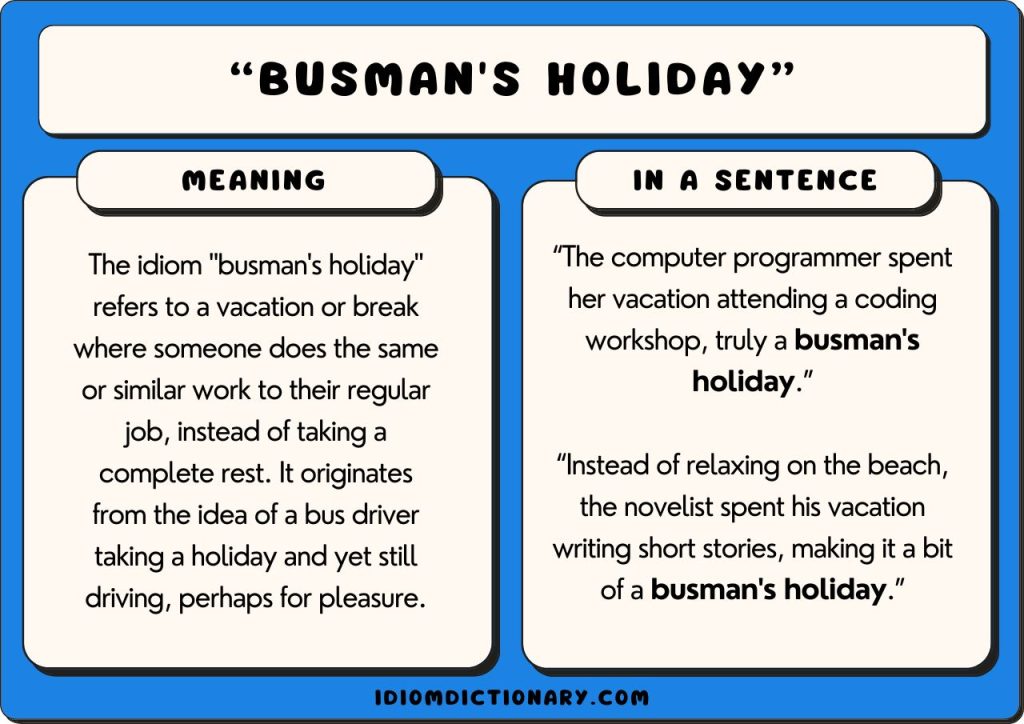
- "Busman’s holiday? Ha, ha":
  See idiomdictionary (HERE).
- "dime-store socks":
  Believe it or not, some things used to cost five and ten cents, and businesses that sold them were called "dime stores" or "the five and dime":
  "Frank Winfield Woolworth had seen the success in Michigan and western New York of so-called nickel stores, where everything cost five cents (the U.S. five cent coin is called a 'nickel'). On February 22, 1879, Woolworth opened his Great Five Cent Store in Utica, New York, and it was his later success and expansion of that format as the F. W. Woolworth Company that would create the American institution of the 'five and dime'." (Wikipedia HERE.)
- An ONTOS survey of Charlotte Armstrong's Crippen & Landru collection, Night Call and Other Stories of Suspense, which doesn't contain today's story, is (HERE).

Unless otherwise noted, all bibliographical data are derived from The FictionMags Index created by William G. Contento & edited by Phil Stephensen-Payne.
~~~~~~~~~~~~~~~~~~~~~~~~~~~~~~~~~~~~~~~~~~~~~~~~~~~~~~~~~~~~~~~~~~~~~~~~~~~~

Thursday, September 12, 2024

UPDATE: Christopher Anvil's Heuristician Series

Added Luminist Archives links to three stories: "The Problem Solver and the Spy," "The Problem Solver and the Defector," and "The Problem Solver and the Burned Letter" (HERE).

Sunday, September 8, 2024

About Candles and Hidden Messages

WHILE he was an expert with impossible crime story plots, Joseph Commings sometimes wandered away from them to produce fascinating excursions into the outré, one of which would be . . .

(1) "The Cardinal's Candles."
By Joseph Commings (1913-92; Wikipedia HERE and the ISFDb HERE).
First appearance: Suspense (U.K.), November 1959.
Reprinted in Suspense (Australia), November 1959.
Short short story (5 pages).
Online at The Luminist Archives (HERE; go to text page 81).

   ". . . if he really suspects he's being poisoned, I can free him of it."

DO you trust your doctor—with your life? The Cardinal of France is about to do just that—"Although," he says, "in another respect you are said to be a dangerous man." Ah, but 
just how dangerous?

Main characters:
~ Alessandro Cagliostro ("Who gave you these candles, Your Eminence?"), the captain of the French Life Guards ("His Eminence trusts you"), and "the beautiful Marchioness d'Auz" ("what was wrong with the Cardinal?").

Typo: "Your Emneince".

References and resources:
- "Monseigneur le Cardinal!":
  If we go with Cagliostro's lifespan, then this cardinal would have to be . . .
  "Étienne Charles de Loménie de Brienne (1727–1794), a French clergyman, bishop, cardinal, politician and finance minister of King Louis XVI." (Wikipedia HERE.)
- "a turnspit dog":
  Now, sad to say, no more, a victim of domestic technology:
  "The turnspit dog is an extinct short-legged, long-bodied dog bred to run on a wheel, called a turnspit or dog wheel, to turn meat. It is mentioned in Of English Dogs in 1576 under the name 'Turnespete.' William Bingley's Memoirs of British Quadrupeds (1809) also talks of a dog employed to help chefs and cooks. It is also known as the Kitchen Dog, the Cooking Dog, the Wheeling Dog, the Underdog and the Vernepator." (Wikipedia HERE.)
- Depending on who you ask, Alessandro Cagliostro (1743-95) was either one of history's greatest sorcerers or a notorious con artist:
  "Cagliostro was an Italian adventurer and self-styled magician. He became a glamorous figure associated with the royal courts of Europe where he pursued various occult arts, including psychic healing, alchemy, and scrying. His reputation lingered for many decades after his death but continued to deteriorate, as he came to be regarded as a charlatan and impostor, this view fortified by the savage attack of Thomas Carlyle (1795–1881) in 1833, who pronounced him the 'Quack of Quacks.' Later works—such as that of W. R. H. Trowbridge (1866–1938) in his Cagliostro: The Splendour and Misery of a Master of Magic (1910)—attempted a rehabilitation."
  . . . "There are numerous references to Cagliostro in the detective novel He Who Whispers by John Dickson Carr (a.k.a. Carter Dickson), one of his Dr. Gideon Fell mysteries, published by Hamish Hamilton (U.K.) & Harper (U.S.A.) in 1946. In this book, a French professor, Georges Antoine Rigaud, has written a history: Life of Cagliostro. An attempted murder committed in He Who Whispers is similar in technique to part of an initiation ceremony undergone by Cagliostro into the lodge of a secret society. Cagliostro Street appears as a location in Carr's 1935 novel The Hollow Man (published in the U.S. as The Three Coffins)." (Wikipedia HERE.)
- A magician calling himself "Cagliostro" is murdered in a locked room in front of six useless witnesses in "Death Casts a Spell," an episode of the Murder: She Wrote TV series. (IMDb HERE). For background in how prestidigitation and detective fiction interact, also see Steve Steinbock's Criminal Brief article "Magic and Mystery" (HERE).
- Holmes encountered a somewhat similar situation (but with a different causation) in "The Adventure of the Devil's Foot" (Wikisource HERE; IMDb HERE).
- If you like your crime fiction with supernatural elements, see A. C. Spahn's mini-dozen (HERE).

COMMINGS now returns to the more familiar territory inhabited by B.U.B. with . . .

(2) "The Moving Finger."
By Joseph Commings (1913-92).
First appearance: Mike Shayne Mystery Magazine, April 1968.
Short short short story (4 pages).
Online at The Luminist Archives (HERE; go to text page 111).

   "'I've noticed,' he said, 'that there's something that you can see—yet you can't see'."

HIDING something in plain sight normally works if that something blends in with its surround-ings. Military snipers, for example, not only thrive but also live or die by it. In this story, Sena-tor Banner could justifiably quote Holmes's admonition to Watson: "You see, but you do not observe. The distinction is clear."

Main characters:
~ U.S. Senator Brooks U. Banner ("Yet you still feel that there's writing left there some-where?"), Sheik Ali Sa'ab ("I'm positive. But where?"), and Bernice ("tall, blonde, and beautiful").

Reference and resources:
- "The Moving Finger":
  Like many other authors (Agatha among them), Commings just can't resist "borrowing" from the Rubaiyat:
  "The quatrain by Omar Khayyam known as 'The Moving Finger,' in the form of its translation by the English poet Edward Fitzgerald is one of the most popular quatrains in the Anglosphere. It reads:

    The Moving Finger writes; and having writ,
    Moves on: nor all your Piety nor Wit
    Shall lure it back to cancel half a Line,
    Nor all your Tears wash out a Word of it.

  "The title of the novel The Moving Finger written by Agatha Christie and published in 1942 was inspired by this quatrain of the translation of Rubaiyat of Omar Khayyam by Edward Fitzgerald." (Wikipedia HERE.)
- ONTOS's previous encounters with Joseph Commings: "Gems Glow with Blood" (HERE), "The Black Friar Murders" (HERE), and "Ghost in the Gallery" (HERE).

Unless otherwise noted, all bibliographical data are derived from The FictionMags Index created by William G. Contento & edited by Phil Stephensen-Payne.
~~~~~~~~~~~~~~~~~~~~~~~~~~~~~~~~~~~~~~~~~~~~~~~~~~~~~~~~~~~~~~~~~~~~~~~~~~~~

Friday, September 6, 2024

"If I Let Go I'd Die"

TODAY'S author has a background in aerospace engineering, which explains a lot about . . .

"Tethers."
By William Ledbetter (born 1961; Wikipedia HERE; ISFDb HERE; and Homepage HERE).
First appearance: Baen.com, November 2016.
Reprints page (ISFDb HERE).
Short short story (7 pages as a PDF).
Online at the Baen Free Library (HERE).
(Parental caution: Strong language.)

   "He would try to kill me in some way that wouldn't breach my suit and waste my precious gas supply."

FOR many reasons, all of them blindingly obvious, walking in space is no stroll in the park. One careless mistake can be fatal—and that just applies to accidents. But when something potentially fatal is caused, you've got a whole new situation, in this case one that adds a new dimension to hanging by a thread . . .

Principal characters:
~ Hartman ("I guess you broke the record. Congratulations"), Hartman's dad ("You're a pretty sharp kid. You must have got that from your mother"), and Sievert ("Are you too nervous to talk, techie? Do you clench your teeth tight to keep them from chattering?").

References:
- "geosynchronous orbit":
  "A geosynchronous orbit (sometimes abbreviated GSO) is an Earth-centered orbit with an orbital period that matches Earth's rotation on its axis, 23 hours, 56 minutes, and 4 seconds (one sidereal day). The synchronization of rotation and orbital period means that, for an observer on Earth's surface, an object in geosynchronous orbit returns to exactly the same position in the sky after a period of one sidereal day. Over the course of a day, the object's position in the sky may remain still or trace out a path, typically in a figure-8 form, whose precise characteristics depend on the orbit's inclination and eccentricity. A circular geosynchronous orbit has a constant altitude of 35,786 km (22,236 mi)." (Wikipedia HERE.)
- "we made quite a nice bolo":
  "Space tethers are long cables which can be used for propulsion, momentum exchange, stabilization and attitude control, or maintaining the relative positions of the components of a large, dispersed satellite/spacecraft sensor system. Depending on the mission objectives and altitude, spaceflight using this form of spacecraft propulsion is theorized to be significantly less expensive than spaceflight using rocket engines." (Wikipedia HERE.)
- Someone named universe1701 has collected a list of 19 "Best Stranded in Space Movies" on the IMDb (HERE).
- Equally determined adversaries can be found in Miles J. Breuer's "The Puzzle Duel" (HERE), Fritz Leiber's "Moon Duel" (HERE), and Poul Anderson's "Out of the Iron Womb" (HERE).

The bottom line:

Unless otherwise noted, all bibliographical data are derived from The FictionMags Index created by William G. Contento & edited by Phil Stephensen-Payne.
~~~~~~~~~~~~~~~~~~~~~~~~~~~~~~~~~~~~~~~~~~~~~~~~~~~~~~~~~~~~~~~~~~~~~~~~~~~~